Telegram Bot Trading Guide: copyfomo Setup
learn telegram bot trading with copyfomo. set up on-chain copytrading from fomo, manage permissions, and avoid common risks in this practical guide.
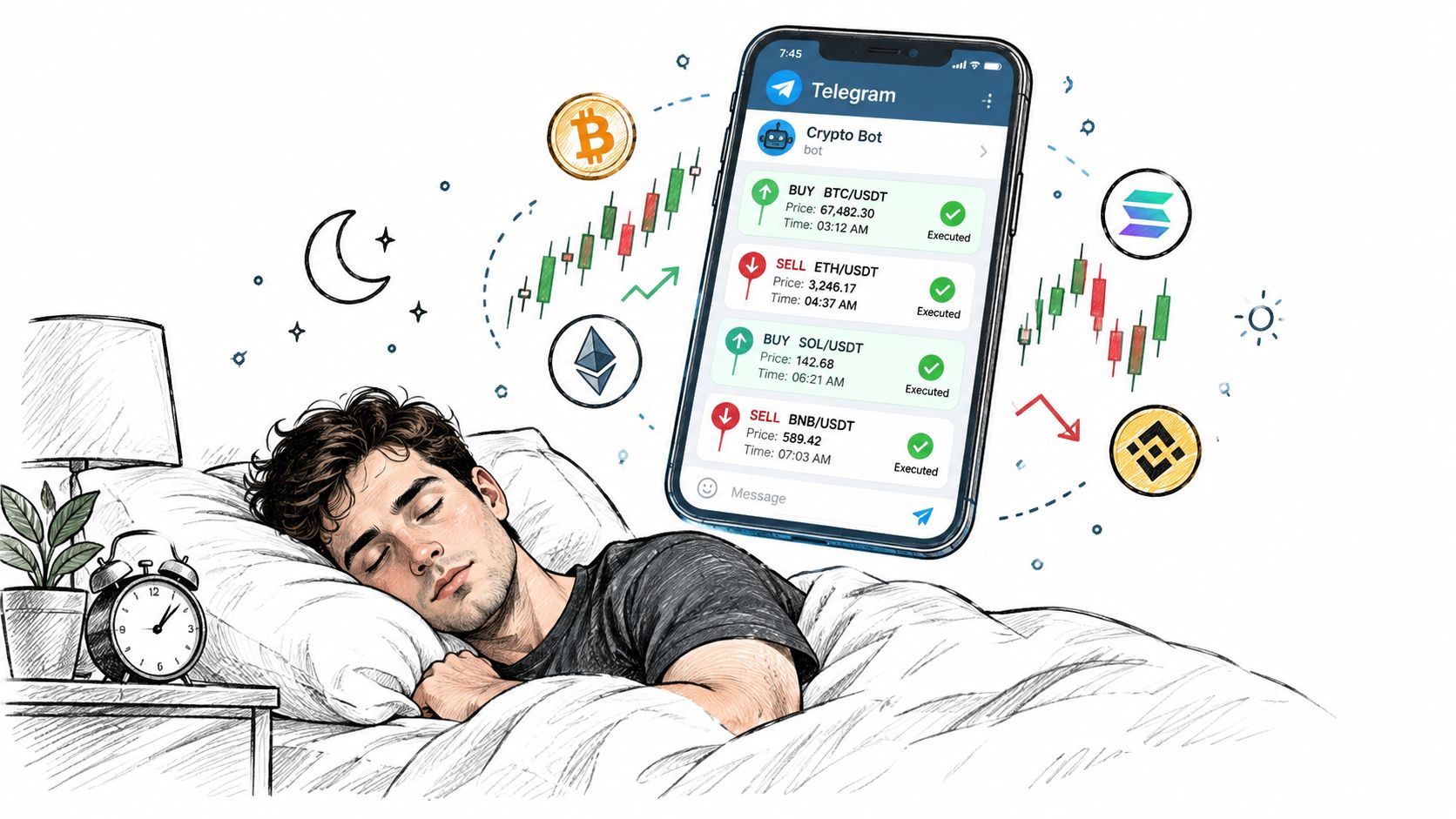
You set a copy trade before bed. The source trader enters while you're asleep, or while you're working across a different time zone. By the time you open Telegram, the entry is already on-chain and the price has moved.
That's the practical reason traders use telegram bot trading. It removes the need to watch every wallet manually. The harder question is whether the copied fill, permissions, and exit process deserve your trust. Speed helps, but it isn't the same as execution quality or safety.
Table of Contents
- Why Telegram Bot Trading Fits Crypto Traders
- Setting Up copyfomo on Telegram
- Understanding Execution Quality and Slippage
- Managing Permissions and Kill Switch Controls
- The Non-Custodial Risk Model
- Starting Your Copytrading Workflow
Why Telegram Bot Trading Fits Crypto Traders
Crypto markets don't wait for your schedule. A trader in Europe can miss an entry during the night. A trader in Asia can be away from the screen when a source wallet buys. Manual copying also breaks down when you're tracking several wallets and need to act before liquidity changes.
Telegram provides a familiar control surface for that problem. Telegram reported passing 1 billion monthly active users in 2025, although the figure is company-reported and the platform doesn't disclose every methodological detail behind it. Its scale helps explain why Telegram became an important interface for crypto communities, token launches, decentralised-finance groups, alerts, and automated workflows. Telegram's own press information doesn't prove that any bot is profitable or safe, but it does show why distribution through the app matters.
The useful distinction is between automation and delegation. You're not asking a bot to decide whether a trader is good. You're selecting a source, defining the amount to mirror, and accepting that your execution can differ from theirs. A tool such as copyfomo mirrors filled buys and sells from selected traders on the fomo leaderboard into your wallet at a configured size. The advertised execution is approximately a second behind the source transaction, but that timing doesn't remove network competition, price impact, or failed transactions.
Practical rule: Treat unattended copying as a separate trading account, not as a way to reproduce another wallet's results.
Telegram works well here because the interface is always available on mobile and can keep controls close to the live trade feed. It doesn't replace transaction review, permission management, or position sizing. It reduces the gap between a source trade and your response.
That distinction matters because Telegram's reach says nothing about a specific bot's execution, contract security, trader selection, or risk controls. The platform is a delivery channel. The wallet permissions and on-chain results are what you need to evaluate.
Setting Up copyfomo on Telegram
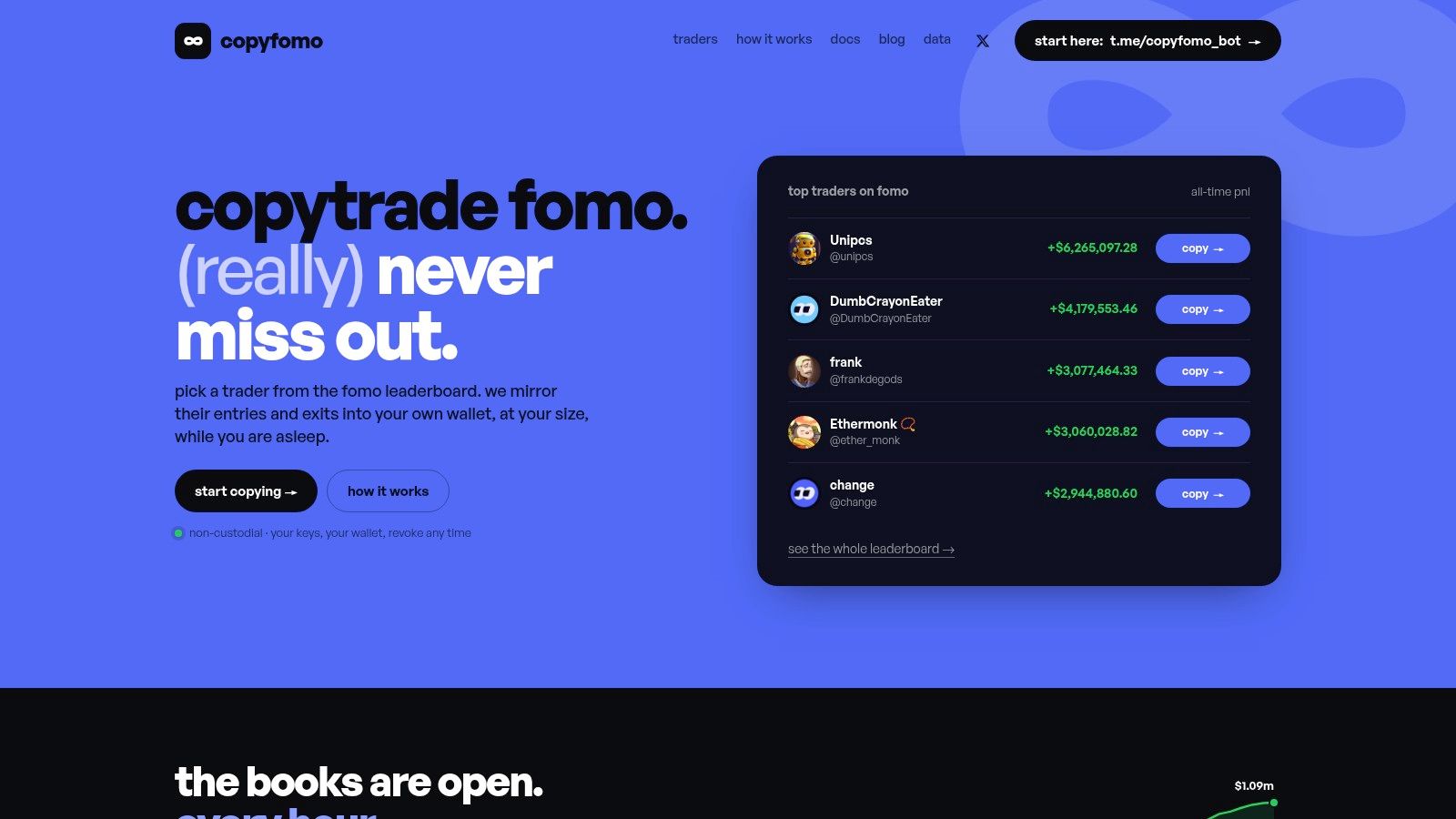
You need a Telegram account and a Web3 wallet you control. Start the bot at t.me/copyfomo_bot, then follow the prompts to connect your wallet and review the permissions before enabling copying.
Connect the wallet and review access
The setup uses a non-custodial allowance model. You don't deposit assets into an operator-controlled account. Instead, you grant a spending allowance that can be reviewed and revoked. Read the spender address and the scope of the approval before signing. A wallet connection by itself isn't enough information. You need to know what the authorised contract can spend and which assets it can access.
Ethereum.org explains that token allowances remain active after you disconnect a wallet from an application. The approval stays in place until you revoke it, and revocation requires a new signed transaction that incurs a network fee. Its guide to reviewing and revoking token access is useful background before you approve any automated trading service.
Choose the source and sizing rule
The public fomo leaderboard ranks traders by realised PnL based on filled trades. That ranking is a starting point, not a promise of repeatable performance. You can also identify a trader from a handle or profile screenshot, which allows wallet discovery beyond the leaderboard's visible top segment.
Configure the amount before activation. Fixed-ticket sizing keeps each copied trade at a defined amount. Proportional sizing follows the source trade more closely, but it can expose you to larger notional changes unless you add a per-trade cap. A cap gives the workflow a hard boundary when the source wallet increases its position size.
Check the surrounding Telegram environment
Telegram has no universal verified-bot system. Before using any bot, confirm the account handle, contract details, and official documentation. For teams assessing Telegram activity more broadly, Telegram Radar by Horus Intelligence offers context on channels and activity outside the copy workflow.
Once the allowance and sizing rules are in place, the bot can monitor the selected trader's confirmed or pending swaps and mirror them into your wallet. Don't treat the first activation as a set-and-forget event. Review the live feed, timestamps, copied amount, displayed slippage, and transaction status. The relevant setup documentation is available at copyfomo's documentation.
Understanding Execution Quality and Slippage
You copy a trader who bought well. Your bot fires within seconds. The position still opens at a worse price. That gap is where copytrading results usually drift away from leaderboard rankings.
Execution quality decides whether a copied trade is close enough to matter. After the source transaction appears, your order still has to deal with mempool competition, uncertain block position, pool depth, token-tax behavior, and transaction ordering. Research summarized in The study's findings on Telegram trading bots and reordering slippage found that 72% of analysed swaps experienced negative reordering slippage, rising to 92% for swaps above $250,000. The same sample reported average slippage of 1.7% on Uniswap V3 and 5.9% on Uniswap V2. Those figures explain why speed claims on their own are weak.
Two wallets can follow the same route and still get different fills. Trade size changes the outcome. On smaller swaps, gas can dominate the economics. On larger swaps, price impact and slippage start to carry more weight. A displayed source price is not your benchmark. Your benchmark is the amount your wallet receives after the transaction lands.
Record the fill, not the headline
Track each mirrored swap at the transaction level. Record the source transaction, your submission time, inclusion time, quoted price, actual realised price, gas paid, route, amount received, effective slippage, and whether the transaction reverted. copyfomo surfaces displayed slippage for each copied swap, which is more useful than judging performance from a ranking table alone.
| Metric | Why It Matters |
|---|---|
| Source-to-copy delay | Shows how long the copier waited before submission and inclusion. |
| Quoted versus realised price | Identifies movement between the quote and the actual fill. |
| Gas paid | Separates network cost from the trade outcome. |
| Route and amount received | Helps identify liquidity and routing effects. |
| Reverted status | Shows whether the intended position was opened or closed. |
| Entry and exit gap | Reveals whether copied exits kept pace with the source. |
If you need a plain definition, this explanation of slippage in crypto frames it correctly. Slippage is the gap between the expected amount and the amount received, measured against the expected amount.
Exits need the same scrutiny as entries. A source wallet can sell while your copied transaction is still waiting. Liquidity can also change before your exit reaches the pool, which means the copied close may fail or fill worse even if the entry looked acceptable. Mirroring buys and sells helps, but it does not produce identical execution.
That is why copied performance diverges from the source even when the strategy call was right. Compare net realised PnL after fees and observed copier slippage against the source result, not headline PnL on a leaderboard. Rankings are a starting filter. They do not prove that another wallet can reproduce the same entries, exits, size, or liquidity conditions.
Managing Permissions and Kill Switch Controls
Non-custodial execution changes the custody question. The assets remain in your wallet, and the bot works through a user-granted spending allowance rather than holding your private keys. That reduces the risk of handing over withdrawal control, but it creates an active permission-management job.
Start with the allowance itself. Check the spender contract, token scope, approved amount, and the transaction route. If the service supports a limited allowance, prefer a limit that matches the amount you intend to automate rather than an unnecessary unlimited approval.
Run a permission audit
Use this checklist before activation and after material changes:
- Verify the official bot account. Telegram's lack of a universal verified-bot system makes impersonation a practical risk. Confirm the handle through the project's official site and documentation.
- Check the contract address. Don't sign an approval because a message or group member presented it as official.
- Review the allowance. Identify which token, contract, and amount the spender can use.
- Separate operating capital. Keep automated trading funds apart from long-term holdings. A dedicated wallet limits the impact of a bad approval or compromised execution path.
- Test the kill switch. Know how to pause new copies and how to close open mirrored positions if that option is available.
- Revoke when finished. Revocation sets the spender's allowance to zero. It doesn't recover assets already taken, erase a leaked seed phrase, or cancel every other authorisation mechanism.
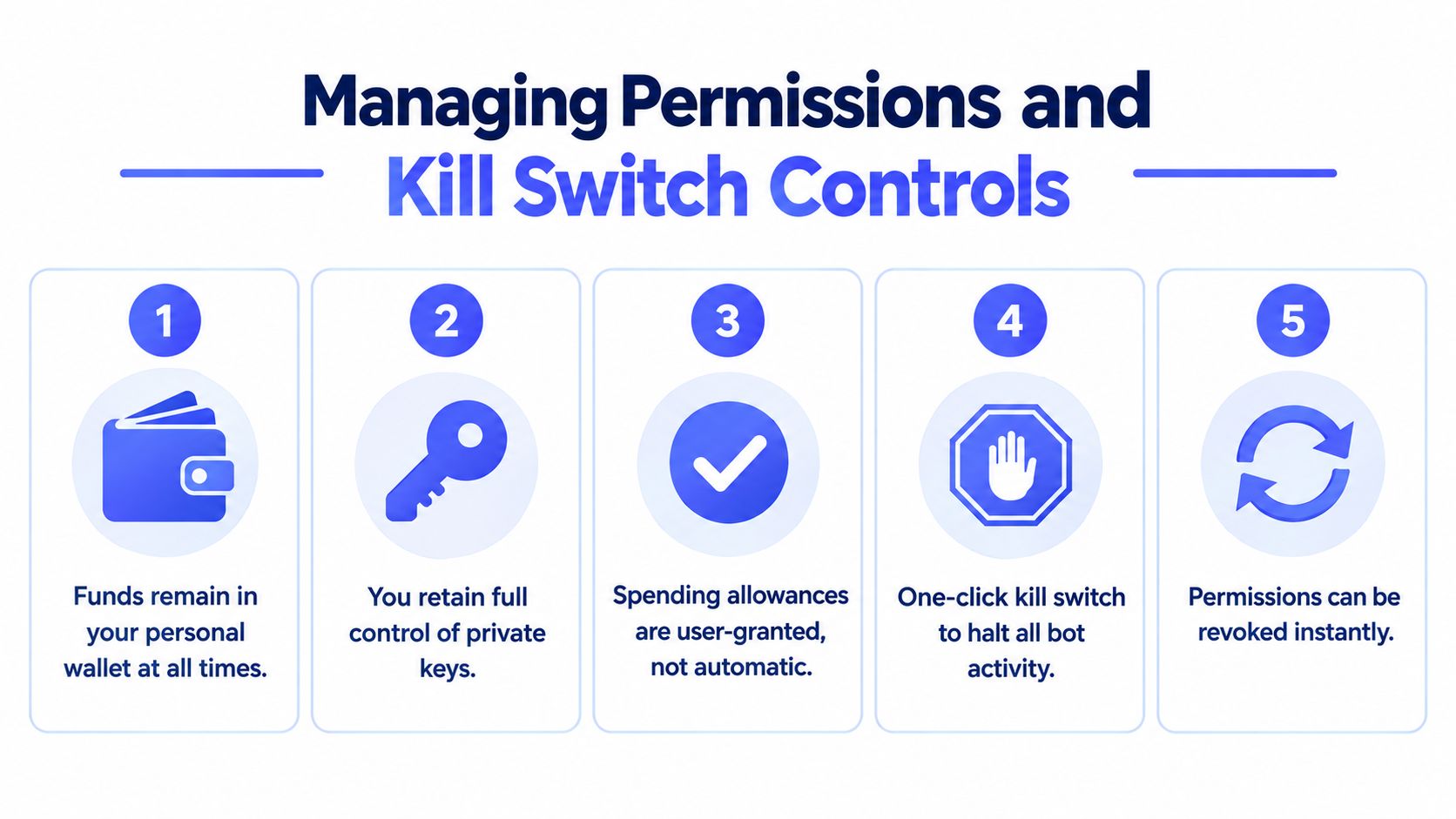
Ethereum's allowance model means disconnecting your wallet isn't the same as revoking access. The approval can remain usable until you submit a revocation transaction. Suby's guide to set up Telegram gating is a separate resource for understanding how Telegram access controls can be structured, but it shouldn't replace a direct review of wallet permissions.
Use the stop control before you need it
A kill switch should pause new copies immediately. If available, the optional one-tap closure of open mirrored positions gives you another response when a trader behaves abnormally, a contract looks suspicious, or copied slippage changes sharply. It doesn't reverse a confirmed transaction. It stops the next action and helps limit further exposure.
Keep the switch visible in your operational routine. Review the live feed, inspect allowances regularly, and revoke access when you stop using the service. This guide to DeFi trading bots provides additional context on automated workflows, but the same rule applies: automation is only as controlled as the permissions and stop procedures around it.
The Non-Custodial Risk Model
You connect a wallet, set an allowance, and keep your keys. That is the core safety difference in Telegram bot trading. The bot does not need custody to trade on your behalf. It needs permission. That distinction matters more than the label.
A non-custodial setup reduces one class of risk and leaves another fully in play. If the workflow uses an external wallet with a limited token approval, the operator cannot pull funds the way a custodial platform can. The approved contract can still spend the tokens covered by that allowance. That is where real failures happen. Bad transaction construction, contract bugs, phishing, token taxes, weak liquidity, hostile routes, and poor trader selection can all hit a copytrader account. A 2023 exploit involving a token-approval router reportedly caused about $280,000 in losses according to industry incident reporting. The lesson is simple. Key ownership and permission scope are separate risk controls.
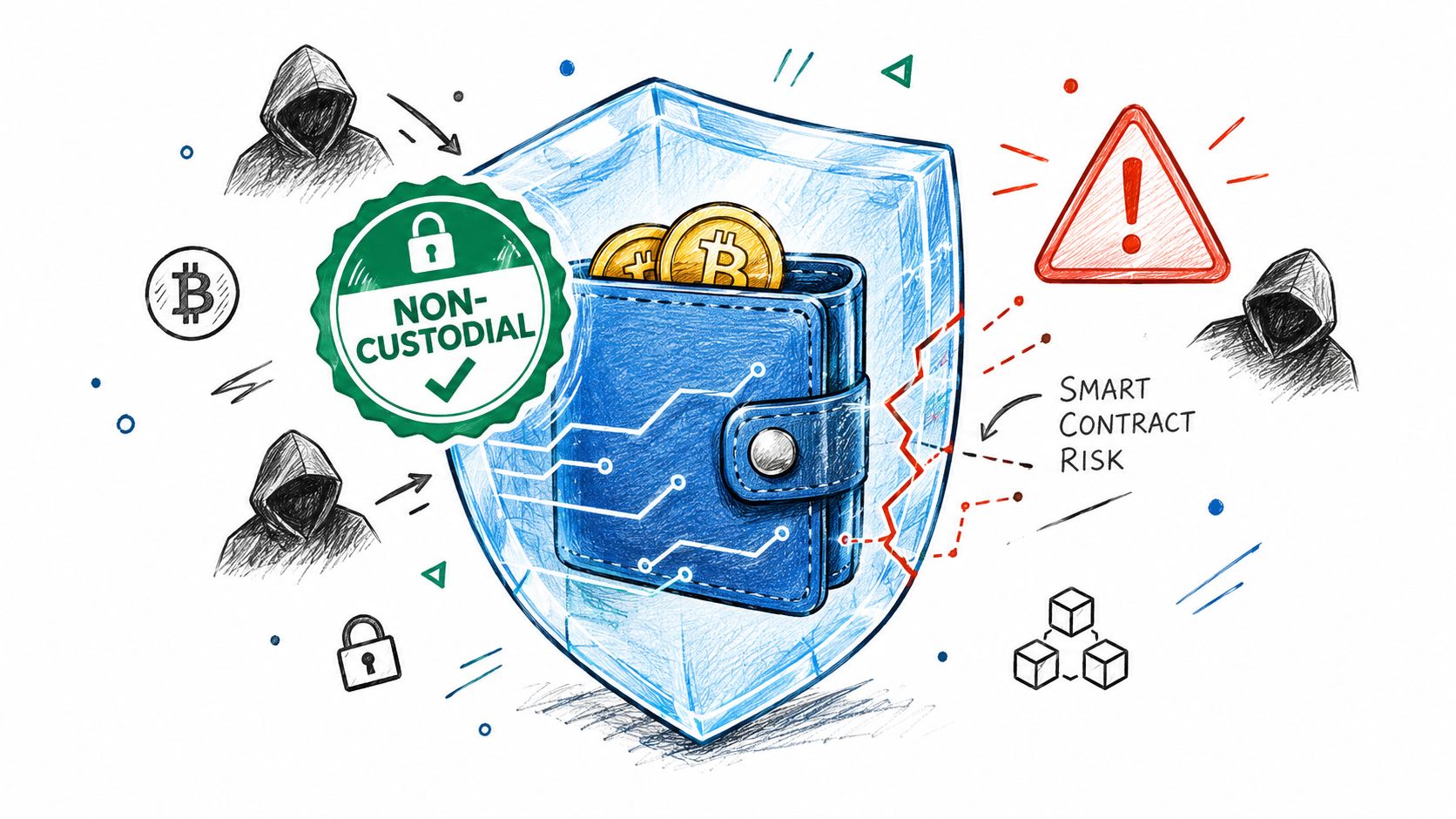
The practical question is not whether a bot is non-custodial. The question is what the bot is allowed to do.
- Can the approved contract spend only selected tokens?
- Is the allowance capped or unlimited?
- Can the execution contract be upgraded?
- Who controls that upgrade path?
- Can the bot close positions, or only open them?
- Are transactions and failed attempts visible in a public record?
- Can you pause copying without disconnecting the wallet?
- Can you revoke the approval through a standard wallet transaction?
That checklist exposes the trade-off. A bot-created wallet may feel easier, but if the operator controls the generated private key, the user has a custody problem. An external wallet with a narrow allowance keeps key ownership with the user. It also makes the risk easier to inspect and limit.
Fraud risk around crypto remains high. The available reporting on the FBI's 2025 IC3 crypto-fraud data cites $11.366 billion in cryptocurrency-related fraud losses in the United States, including $7.228 billion attributed to crypto investment scams, alongside 181,565 crypto-fraud complaints and an average crypto-fraud loss of $62,604. Those figures do not measure legitimate Telegram bot trading, and they do not show what share came from Telegram. They do show the setting in which fake support, impersonation, malicious links, and approval abuse keep working.
Non-custodial changes the trust boundary. You still need to verify the contract, cap the allowance, and use the emergency stop.
Leaderboards do not validate any of this. They also do not tell you what your copied account will earn. Real results diverge because of fill quality, route selection, fees, failed transactions, and exits you receive after the source wallet. Check realised fills and copied exits in your own wallet. Measure the account after costs.
Starting Your Copytrading Workflow
Select a trader from the fomo leaderboard or identify one through a handle or profile screenshot. Set fixed or proportional sizing, add a per-trade cap, and grant only the allowance needed for the workflow.
Then monitor the mirrored swaps. Check timestamps, displayed slippage, realised fills, failed transactions, and both entries and exits. Copy trading doesn't reproduce the lead trader's performance exactly. Fees, liquidity, late execution, and position concentration can leave your result materially different.
Treat the copied account as its own strategy. Past performance does not predict future returns, and copying one trader concentrates exposure in that trader's approach. Review the controls before you leave it unattended.
copyfomo provides Telegram-based mirroring of selected fomo trades, with configurable sizing, revocable wallet allowances, copied exits, and a live record of mirrored swaps. If that permission model and execution tracking fit your workflow, start the bot on copyfomo.
stop reading. start copying.
pick a trader from the fomo leaderboard, set your size, and the entries and the exits land in your own wallet while you sleep.
open copyfomo on telegram →