Copy Trading Telegram: How Bots Mirror Trades
copy trading telegram bots explained: how they mirror on-chain swaps, latency and slippage, custody models, permission checks and a controlled setup.
A Telegram copy trading bot places matching on-chain swaps from your own wallet whenever a trader you follow fills a trade, at a size you set.
You've found a trader on the fomo leaderboard, but their next entry happens while you're offline. By the time you open your wallet, the price has moved, and you don't know whether they've already started selling. Automation removes the manual step. It doesn't remove the difference between their fill and yours.
The useful questions aren't just who to follow. They're what price you'll accept, how exits get copied, and what spending permission you're granting.
Table of Contents
- What Copy Trading on Telegram Actually Means
- How a Telegram Bot Mirrors a Trader On-Chain
- Latency, Slippage and Exit Timing in Practice
- Custodial and Non-Custodial Models Compared
- Permission Checks Before You Approve Anything
- Risks Regulators Flag in Copy Trading
- Set Limits and Start Small with copyfomo
What Copy Trading on Telegram Actually Means
A copy trading Telegram bot mirrors an executed trade, not a chart, a tip, or a stated plan. Think of a mirror that reflects what the trader did, scaled to your ticket. It can't show what they meant to do or why they changed their mind.
Suppose you notice a trader buying a token on fomo. With manual copying, you inspect the trade, open your wallet, enter an amount, and submit your own swap. You're making a separate trade after theirs, potentially against a different price.
With automated copying, you set the rules before that happens. The bot submits the matching swap without waiting for you to read an alert or confirm each transaction.
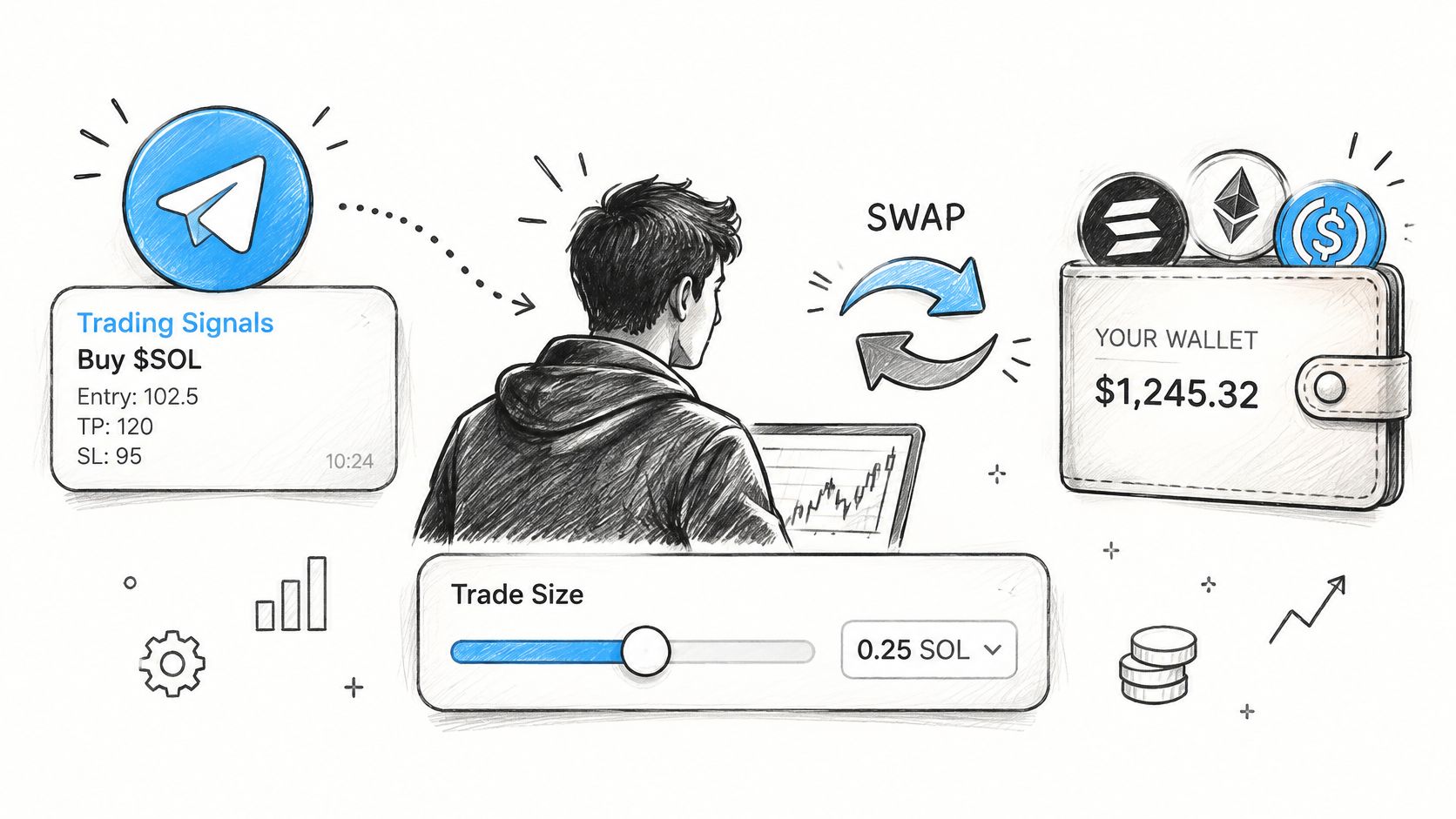
Filled Trades, Not Claimed Results
On fomo, traders are ranked by realized PnL from filled trades. That makes the leaderboard a record of executed activity rather than a collection of claimed results. It still isn't a forecast, and the rank alone doesn't tell you whether the trading style fits your limits.
Telegram is the delivery layer. Setup, commands, and the live trade feed sit inside the chat app. Your wallet and the on-chain transaction remain separate from the interface you use to control them.
Copying a trader's action doesn't mean copying their judgment. You receive the transaction, not their full reasoning.
This setup can suit part-time traders and people whose time zones don't match the traders they follow. Newer participants can also use the filled-trade feed to study how experienced wallets enter and exit. Unattended execution, however, means your settings must remain sensible when you're not watching.
Copy trading carries risk, and past performance does not predict results.
How a Telegram Bot Mirrors a Trader On-Chain
The trade-off comes first: automation replaces repeated manual decisions with standing instructions. If those instructions allow a trade you wouldn't approve while watching, the bot can still submit it.
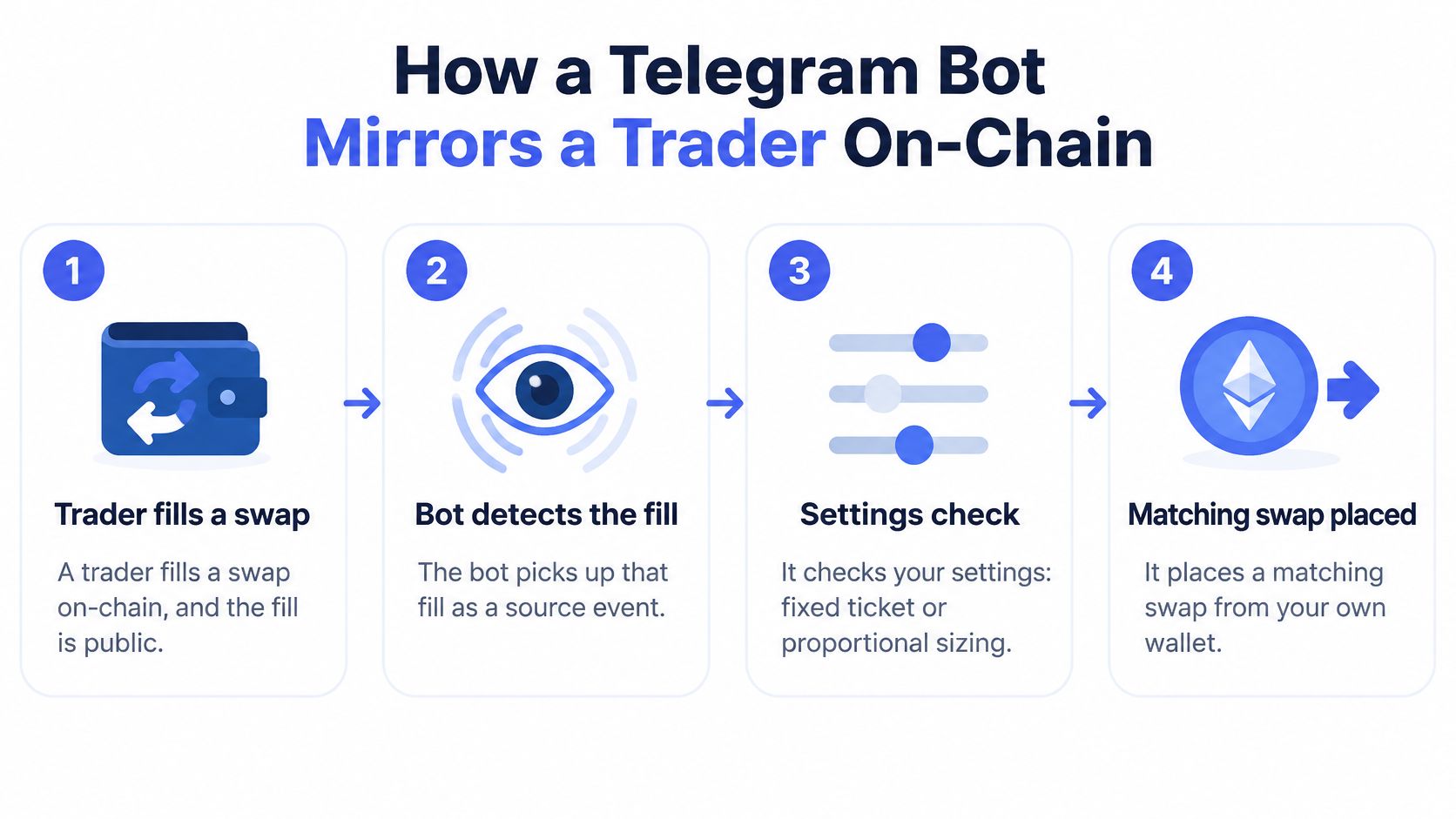
The user-facing sequence is straightforward. This describes the execution flow, not the service's internal detection or connection methods.
- The source trader fills a swap. The executed transaction becomes the trade to mirror. An unfilled intention isn't the same thing.
- That fill becomes the source event. The follower receives a copy of an actual buy or sell, rather than a message suggesting a possible trade.
- Your settings determine eligibility and size. Fixed-ticket or proportional sizing, the per-trade cap, and the pause state define what can proceed.
- A matching swap is submitted from your wallet. Allowance-based execution must stay within the permission you granted.
- The copied swap settles. The live feed records the mirrored transaction with timestamps and displayed slippage.
- The source trader's sell triggers the exit flow. The follower's sell remains a separate transaction with its own execution conditions.
The diagram shows the basic sequence from source fill to matching swap.
Fixed Tickets and Proportional Sizing
Consider a hypothetical sizing example. With a fixed ticket of 200 USDT, a source trader's 5,000 USDT buy produces a 200 USDT copy. With proportional sizing at 2% of that source trade, it produces a 100 USDT copy.
The distinction matters more than the example amounts. A fixed ticket keeps the configured order amount predictable, but it doesn't preserve the source trader's relative sizing. Proportional sizing follows changes in source size, so a larger source order can create a larger copy unless a cap applies.
Neither method limits total exposure by itself. Repeated eligible entries can still leave you holding several positions.
Exits Are Part of the Instruction
An entries-only copier leaves the job unfinished. You could still hold a token after the source trader has reduced or closed their exposure, like a relay runner who takes the baton and stops at the first corner.
The demonstration provides another view of the workflow.
The bot runs without confirming each trade. The settings you choose become the rules it follows, including when you're away from Telegram.
Latency, Slippage and Exit Timing in Practice
A short delay can still produce a different fill. On a decentralized exchange, the follower submits a new transaction into a pool that may have changed since the source traded.
Other buyers and sellers can alter the pool's token balances before your swap executes. Competing transactions, gas priority, and transaction ordering can also affect where your trade lands. Fast submission helps, but it isn't the same as fast confirmation or matching the source price.
An empirical study of Uniswap transactions reports that roughly 90% waited fewer than 12 seconds for block confirmation, while the 99.5th-percentile wait exceeded 20 blocks. The study also finds that slippage increases as a transaction remains longer in the mempool, the queue of pending transactions.
Submission Speed Isn't Fill Quality
copyfomo describes its execution as running about one second behind the source, with displayed slippage for each copied trade. Treat that as a company claim about the copy delay, not a promise of equivalent pricing or confirmation time.
A maximum slippage bound limits the price deterioration you'll accept. A transaction deadline limits how long an instruction remains valid. A per-trade notional cap limits the size submitted under your settings.
These controls have costs. A tighter slippage limit can prevent an unattractive fill, but it can also mean the trade doesn't execute. A rejected exit avoids breaching the chosen limit but leaves the position open.
Execution rule: A fast submission is useful only if the resulting fill stays within your limits.
For the mechanics behind the displayed figure, use the explanation of slippage in crypto. Don't treat the display itself as protection against the cost.
Read the Timeline Before Judging the Strategy
The useful execution record contains source fill time, follower submission time, confirmation time, quoted price, and realized price. Check which fields the live feed exposes and which require the transaction record. Don't assume a displayed timestamp describes every stage.
A copied trade can follow the correct direction and still have poor economics after price impact and fees. Compare the timeline before deciding whether the trader's strategy diverged or the infrastructure submitted late.
Group slippage by token liquidity, order size relative to pool reserves, and delay percentile. A single average can hide the trades where execution was worst.
Execution variables and what to check for each
| Variable | Effect on a copied trade | What to check |
|---|---|---|
| Submission delay | The pool price can change before the copied swap lands, even within the company's stated copy delay | Source fill and follower submission timestamps in the live feed |
| Block confirmation | Confirmation has a long tail, as the Uniswap findings above illustrate | Confirmation time for each trade |
| Slippage | Longer mempool exposure can worsen execution | Displayed slippage per trade, grouped by token and delay |
| Trade size vs pool reserves | Larger orders relative to reserves create more price impact | Per-trade cap and proportional sizing settings |
| Exit delay | A late sell leaves exposure after the source has reduced risk | Confirmation that sell mirroring is active |
Custodial and Non-Custodial Models Compared
A custodial bot is closer to a bank holding your cash and sending it on your instruction. A non-custodial, allowance-based bot is closer to your own safe, with a courier authorized to take a specified amount. The second arrangement changes who controls the assets, but the courier's permission still matters.
A token allowance authorizes a smart contract to spend a token from your wallet. It isn't merely a connection between Telegram and your address. It grants spending authority to a specific spender.
Ethereum's documentation on revoking token access warns that an unlimited allowance can permit spending of the approved token balance, including funds deposited later, until revoked. Revocation is an on-chain transaction and requires a network fee.
Wallet Control and Spending Authority Are Different
Allowance-based execution is non-custodial only while you retain wallet control and can remove the permission. That distinction doesn't eliminate losses from an excessive allowance, a compromised contract, or approval of the wrong spender.
The phrase “funds stay in your wallet” therefore needs context. An authorized contract can still move approved tokens under the permission you signed. You haven't handed over the wallet's keys, but you have delegated part of its spending power.
Custodial and non-custodial models side by side
| Feature | Custodial bot | Non-custodial bot (allowance-based) |
|---|---|---|
| Who holds the keys | The service | You |
| Where the funds sit | Provider-controlled account | Your own wallet |
| Can the provider move funds | Yes, by design | Not with unrestricted wallet authority. The contract can spend within its allowance |
| What you grant | Account access and a deposit | A spending allowance to a contract |
| How you cut access | Withdrawal request, dependent on the provider | Revoke the allowance on-chain, with a network fee |
| Main exposure | Provider failure or frozen withdrawals | Oversized or non-expiring allowance, compromised contract |
What the Label Doesn't Tell You
“Non-custodial” answers a custody question. It doesn't tell you whether the spender is correct, whether its authorization is narrowly scoped, or whether you can revoke access without the chat interface.
Your wallet can remain under your control while an approval still exposes the tokens inside it.
A pause command and an allowance revocation serve different purposes. Pausing copying changes the bot's operating state. Revocation removes the contract's spending permission.
Use the custody model to identify the main dependency, then inspect the authorization separately. Neither a familiar interface nor a reassuring product label substitutes for that check.
Permission Checks Before You Approve Anything
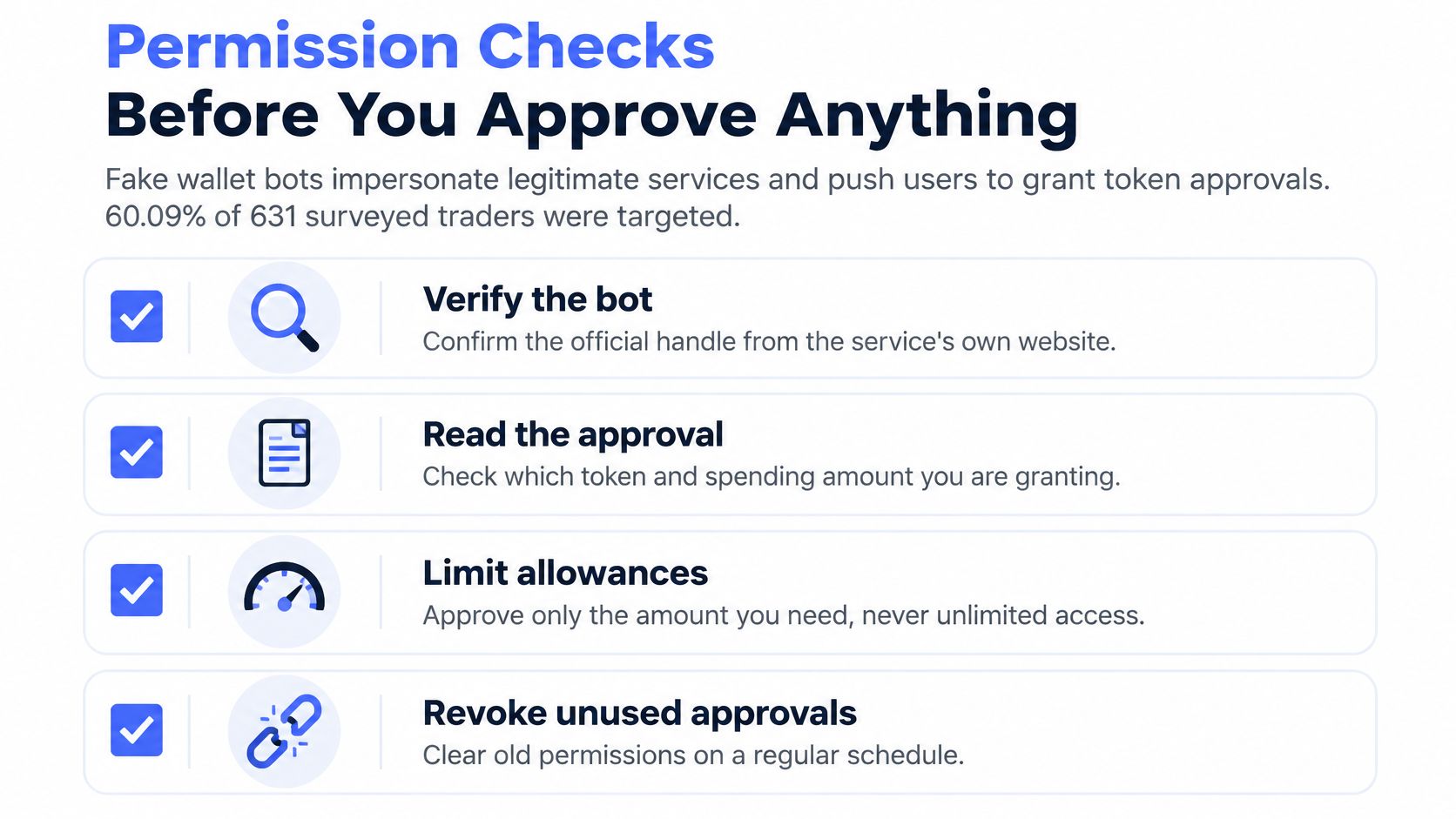
Fake wallet bots can impersonate legitimate services and push users toward token approvals. In a 2024 survey of 631 traders, 60.09% of respondents targeted by scammers on Telegram lost funds, according to the Finance Magnates and FXStreet findings summarized in Coinpaper's Telegram scam overview. That isn't a loss rate for all Telegram users or all copy traders.
The practical threat is an approval that looks like ordinary setup. A familiar name in a chat isn't independent verification.
Before the First Signature
- Verify the bot outside Telegram. Open it through the publisher's website. Treat other handles, forwarded onboarding messages, and unsolicited support contacts as unverified.
- Match the spender and chain. Compare the spender address and chain ID against independently published values. If those values aren't available, don't guess.
- Read the allowance amount. An exact or tightly capped permission limits exposure more than an unlimited approval. Check how it relates to your configured trade size.
- Confirm the token address. Don't rely on the ticker or token image alone.
- Inspect the resulting approval. After setup, use your wallet's approvals view to confirm the spender and amount granted.
- Test with a small ticket. Check the resulting transactions before allowing larger activity. A successful test doesn't establish future safety.
- Keep revocation independent. Save the steps somewhere you can access without Telegram or the bot.
The checklist visual reinforces the permission checks. The survey figure above describes losses among targeted respondents, not the share of all respondents who were targeted.
What the Implementation Should Enforce
The ERC-20 authorization mechanics explained by ChainScore Labs include an allowance-update race. Changing a non-zero allowance directly to another non-zero amount can allow the old permission to be used before the update and the new permission afterward.
Look for zero-first or appropriate increase/decrease patterns, allowance reads before operations, and separate approval and execution contracts. The system should fail closed, meaning it stops when the allowance, spender, chain ID, or calldata doesn't match policy. Don't assume these protections exist without documentation.
Monitoring should flag unexpected spender calls, allowance increases, unrelated token transfers, and unusually large approvals. The wallet-tracker guide is a related resource for reviewing wallet activity, not a replacement for permission checks.
Reviewing these details doesn't itself require a transaction. Approvals, test swaps, and revocations can incur network fees, so don't confuse a free inspection with free execution.
Risks Regulators Flag in Copy Trading
A leaderboard can make copying look like a selection problem: find an experienced trader and follow. Regulators frame it more broadly.
IOSCO's 2025 report on online imitative trading describes copy trading as one investor copying another, often presented as experienced or professional. It identifies crypto-assets among common markets and warns that short-term, frequent trading can increase cumulative losses and transaction costs. It also summarizes research commissioned by France's Autorité des Marchés Financiers and conducted by the Experimental Economics Laboratory of Strasbourg University, which found that copy trading can create conditions encouraging greater risk-taking.
What the Interface Can and Can't Establish
A realized-PnL ranking records past filled trades. It doesn't establish that the next position will work, or that your copied execution will match the source.
Read the underlying history rather than treating rank as a complete assessment. The useful questions concern trade size, trading frequency, exits, and the costs attached to each fill. A headline result leaves those mechanics unresolved.
A live feed improves visibility. It doesn't remove the costs it displays. IOSCO's report covering copy-trading costs identifies high transaction fees as a factor that can erode returns or extend losses.
Transparency lets you inspect a bad fill. It doesn't turn that fill into a good one.
Risks You Can Actually Act On
- Worse follower pricing. The source's execution price isn't an available reservation for everyone who follows. Apply limits to your own transaction.
- Crowded trading. A large following can move prices in the market where the source trades. Popularity isn't evidence of available liquidity.
- Operational failure. Technical failures and cyber-incidents can cause losses even when the intended trading logic is sound.
- Escalating activity. More copied trades mean more occasions to pay execution costs. Review frequency rather than assuming automation makes activity harmless.
The discussion of whether copy trading is legal addresses a separate question from whether a setup suits your risk limits. Don't treat either question as answered by a leaderboard.
The practical conclusion is narrow: copying is an execution and risk-management problem, not merely access to another trader's selections. That's why price limits, authorization boundaries, and a usable stop procedure matter.
Set Limits and Start Small with copyfomo
Select the trading style before connecting anything. A trader who looks attractive by headline rank may trade tokens you don't understand, place orders too frequently for your cost tolerance, or hold exposure you wouldn't accept manually.
Start with the filled-trade histories on the trader pages and review the public dataroom. Use the record to ask specific questions, not to search for a reason to increase size. Frequent trading deserves particular attention because each copied swap brings another set of execution costs.
A Controlled Setup Sequence
- Build a short list. Compare filled-trade histories rather than choosing from rank alone. Look for trading activity you can understand well enough to review afterward.
- Open the official bot. Use the website's published route and complete the permission checks before signing. Don't let a direct message replace that verification.
- Choose the sizing method. Use a fixed ticket for a predictable configured order amount, or proportional sizing with a per-trade cap. Check the consequences of repeated entries as well as individual orders.
- Review execution limits. Confirm the maximum slippage and per-trade notional controls available to you. If a required control isn't exposed or documented, don't assume it's operating in the background.
- Check sell mirroring. Verify that exits are included before allowing the first entry. Know where an unsuccessful copied sell will appear.
- Run a small session. Compare copied fills with source fills in the live feed. Inspect transactions that failed or were skipped, not just those that completed.
- Review the log. Examine timing, slippage, and fees for each trade. Separate an unwanted trading decision from an execution problem.
- Change size only deliberately. If the record doesn't match your expectations, pause and investigate. Keep the pause control and optional one-tap closure of mirrored positions accessible.
Know What Stopping Means
Pausing new copies doesn't close positions already held. Closing mirrored positions submits exit transactions, which still face market conditions and execution constraints. Revoking an allowance addresses permission rather than position exposure.
Those are different actions. Decide which you need before you're trying to stop activity under pressure.
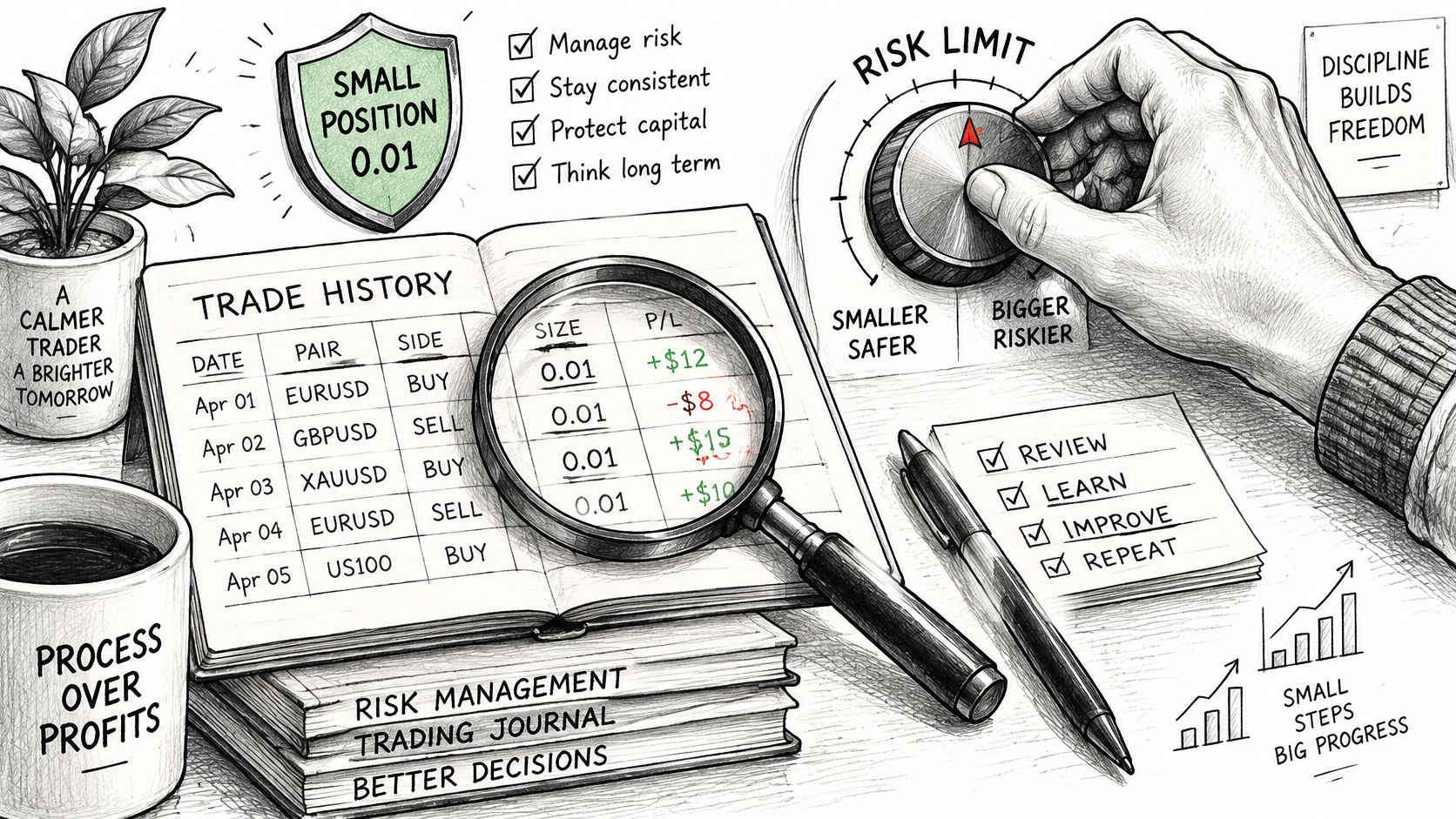
A useful first session tests whether you understand the tool's behavior. It doesn't validate the trader's future performance or establish that a larger allocation is appropriate. Keep reviewing the same execution and permission boundaries after setup.
Copy trading carries risk, and past performance does not predict results.
copyfomo offers Telegram-based mirroring of selected fomo traders' filled entries and exits into your own wallet, with configurable sizing and a live execution feed. Visit copyfomo to start the bot on Telegram, then check permissions and set your limits before enabling copies.
stop reading. start copying.
pick a trader from the fomo leaderboard, set your size, and the entries and the exits land in your own wallet while you sleep.
open copyfomo on telegram →