How to Trade Meme Coins Safely
learn how to trade meme coins with strict risk controls. manage liquidity, slippage, and automation to mirror top wallets without taking on blind risk.

Copying a profitable wallet is not the same as copying its trade. That is the mistake most meme coin traders make. A leaderboard rank tells you who made money, not whether a follower could enter, size, and exit at comparable prices without getting chewed up by slippage and thin liquidity.
The market has already shown how fast the surface can mislead. Aggregate meme-coin market capitalization reached about $88.0 billion on October 29, 2021, then later hit about $150.6 billion in December 2024, which was about 71% above the earlier peak, according to CoinGecko's historical data in its memecoin report. That says something simple. Capital can flood in fast, but execution quality still decides whether a copied trade is usable. CoinGecko's memecoin report
Table of Contents
- The Execution Gap in Meme Coin Markets
- Evaluating Liquidity and Slippage Risks
- Sizing Strategies and Risk Controls
- Automating Entries and Exits Safely
- Managing Allowances and Execution Latency
- Implementing Your Trading System
The Execution Gap in Meme Coin Markets
Before following any wallet, ask one question, could another wallet have entered, sized, and exited at comparable prices? If the answer is no, the trade is not copyable in practice. A profitable wallet can still be unusable to follow when liquidity is thin, the follower is slower, and the fill arrives after the move.
Leaderboard rank answers the wrong question
A leaderboard rank tells you who made money. It does not tell you whether the edge was repeatable for a follower with normal access and normal latency. That gap matters more in meme coins than in slower markets, because price can move before the copy fills.
The launch side is crowded with dead tokens and short-lived volume. A secondary analysis citing Binance Research says roughly 97% of meme coins die or lose meaningful trading volume, with an average lifespan near one year. That is the base rate traders are working against, even when a few winners dominate attention. security and fraud statistics review
A wallet can still show strong realized PnL while the actual trade path is impossible to match. The useful check is simple. Was the entry available, was the size fillable, and was the exit executable at prices a follower could reasonably hit?
Wallet quality needs more than profit
Good screening starts with friction checks. Minimum liquidity matters. Holder concentration matters. You also need to know whether the wallet's reported gains include unrealized appreciation that never turned into executed exits.
That is where many traders misread the record. A wallet can look strong on paper while its real sells depend on priority access, insider timing, or a route the follower will never get. The practical question is direct, could I have copied it cleanly?
For fast-entry setups, the crypto sniper bot guide shows how execution speed changes the outcome.
Evaluating Liquidity and Slippage Risks
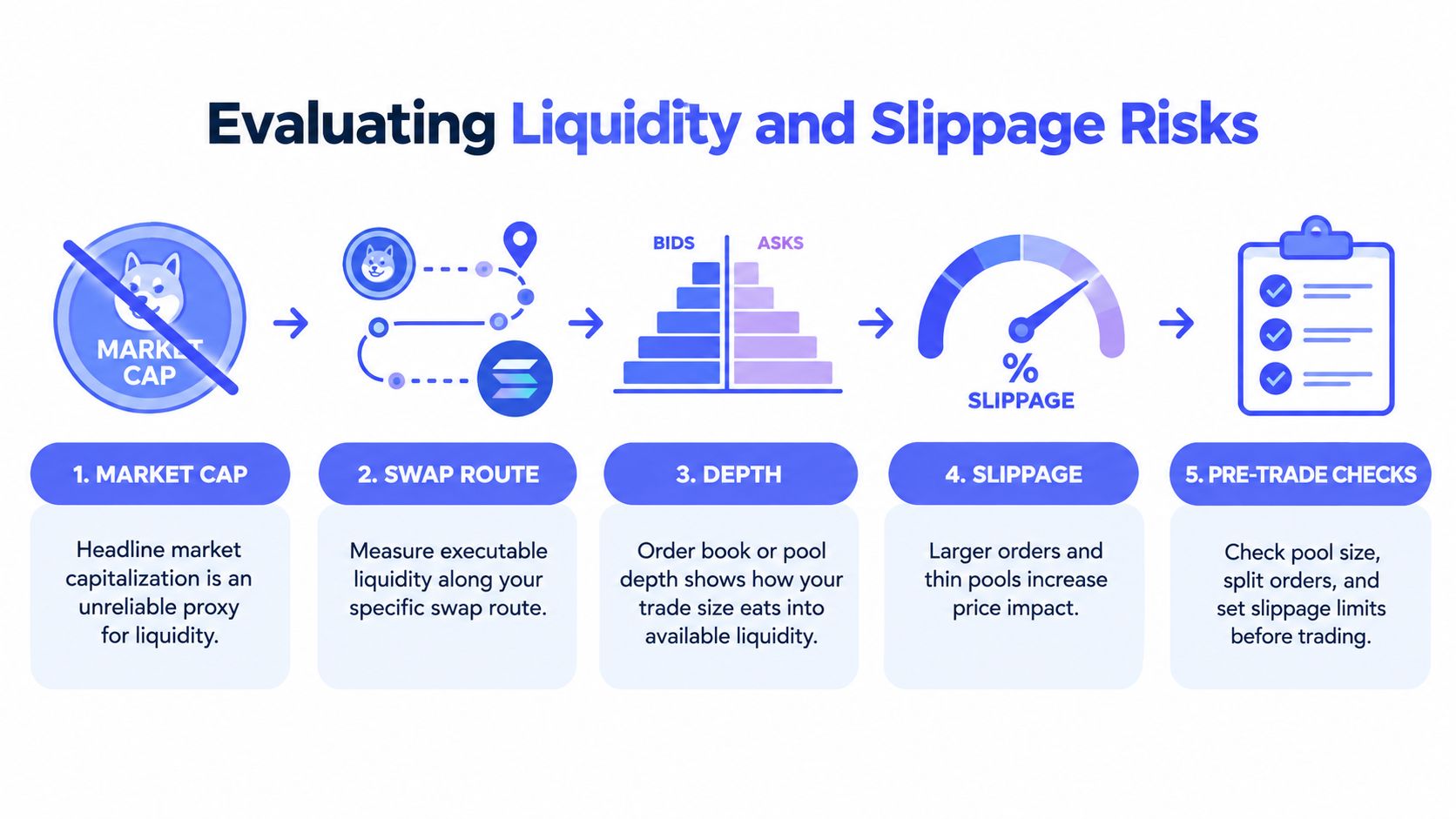
Headline market capitalization is a poor proxy for tradeability. A token can look large on screen and still have little executable depth on the route you need. In the cross-chain study of 34,988 tokens, more than half of the 47 tokens claiming market caps above $1 billion had less than $1,000 of liquidity, and 88.1% had liquidity below 0.1% of reported market cap. That is enough to break a lazy screen. Schwab's meme coin risk guide
Test the exact swap route before trusting market cap
Start with the token contract and the pool or route you would trade. Market cap is an aggregate number. Executable liquidity is route-specific. If the intended swap path cannot support your ticket size, the token is not liquid for you, whatever the chart suggests.
Run the trade mechanically. Simulate the buy and the sell at your planned size. Set a maximum price-impact limit. Reject tokens where liquidity sits in one pool or is effectively controlled by a small set of wallets. In the same study, analysts found signs of artificial growth in 82.8% of high-return tokens, including wash trading and pool-based inflation, which is another reason to check the route, not the surface. Schwab's meme coin risk guide
Thin pools punish size. If the route cannot absorb the trade, conviction does not matter.
Slippage is part of the trade, not a surprise
A peer-reviewed study of decentralized exchange activity defines slippage as the difference between the expected and executed price. It reported average expected slippage of 0.58% and average unexpected slippage of 1.16% in historical Uniswap transactions. That is enough to turn a decent mirror trade into a worse fill once the source has moved on. peer-reviewed slippage study
The guide to reading order books is useful because it trains you to look at depth, not just last price. The same logic applies onchain. A copied trade is only as good as the depth available when your swap lands.
Keep a record of quoted price, executed price, pool liquidity, route, and delay for every fill. If realized slippage breaches your threshold, stop new copies. For a practical breakdown of fill mechanics, the slippage guide is worth keeping open.
Sizing Strategies and Risk Controls
Risk control comes before performance ranking. The launch population is too toxic to size aggressively just because a wallet looks hot. In meme coins, survival depends on limiting damage when the market is wrong, the route is thin, or the source exits faster than you do.
Cap every mirrored fill before you chase performance
Fixed sizing is blunt, but it is easy to control. You set one ticket size and use it across copies. Proportional sizing follows the source more closely, but it can also scale you into bad fills if the source wallet is trading larger than the pool can support. Both approaches need a cap.
A sane structure is simple:
- Per-trade cap: limit each mirrored fill to a fixed maximum.
- Per-token cap: stop one token from dominating the book.
- Per-source cap: limit exposure to any single wallet, no matter how strong the leaderboard looks.
- Execution cap: cut off new copies when slippage or fill quality falls outside tolerance.
The important part is what happens after fees. Gas, swap fees, slippage, failed transactions, and copy latency all belong in the result. Ignore them and a high win rate can hide poor expectancy. That is how people mistake activity for edge.
For sizing mechanics, the crypto position sizing formula is a decent reference point because it keeps the focus on risk per trade instead of raw enthusiasm.
Hard rule: if a copied trade cannot survive costs and delay on paper, it should not be mirrored live.
Judge drawdown before you judge win rate
Maximum drawdown matters more than a nice screenshot. So do loss-tail outcomes and the percentage of trades that could not be exited near the source price. Those numbers show whether the system can keep functioning after a bad run.
The SEC describes meme coins as speculative and subject to significant volatility, often with little or no functional utility. That makes blind scaling a bad habit. Cap exposure first, then rank traders. If realized slippage keeps widening, disable new copies before the damage spreads.
Automating Entries and Exits Safely
Manual copy trading is clumsy in meme coins. Entries get caught late. Exits get missed entirely. A follower who only catches buys is usually taking the worst half of the job, because the profitable part often depends on getting out when the source gets out.
Mirror both sides of the trade
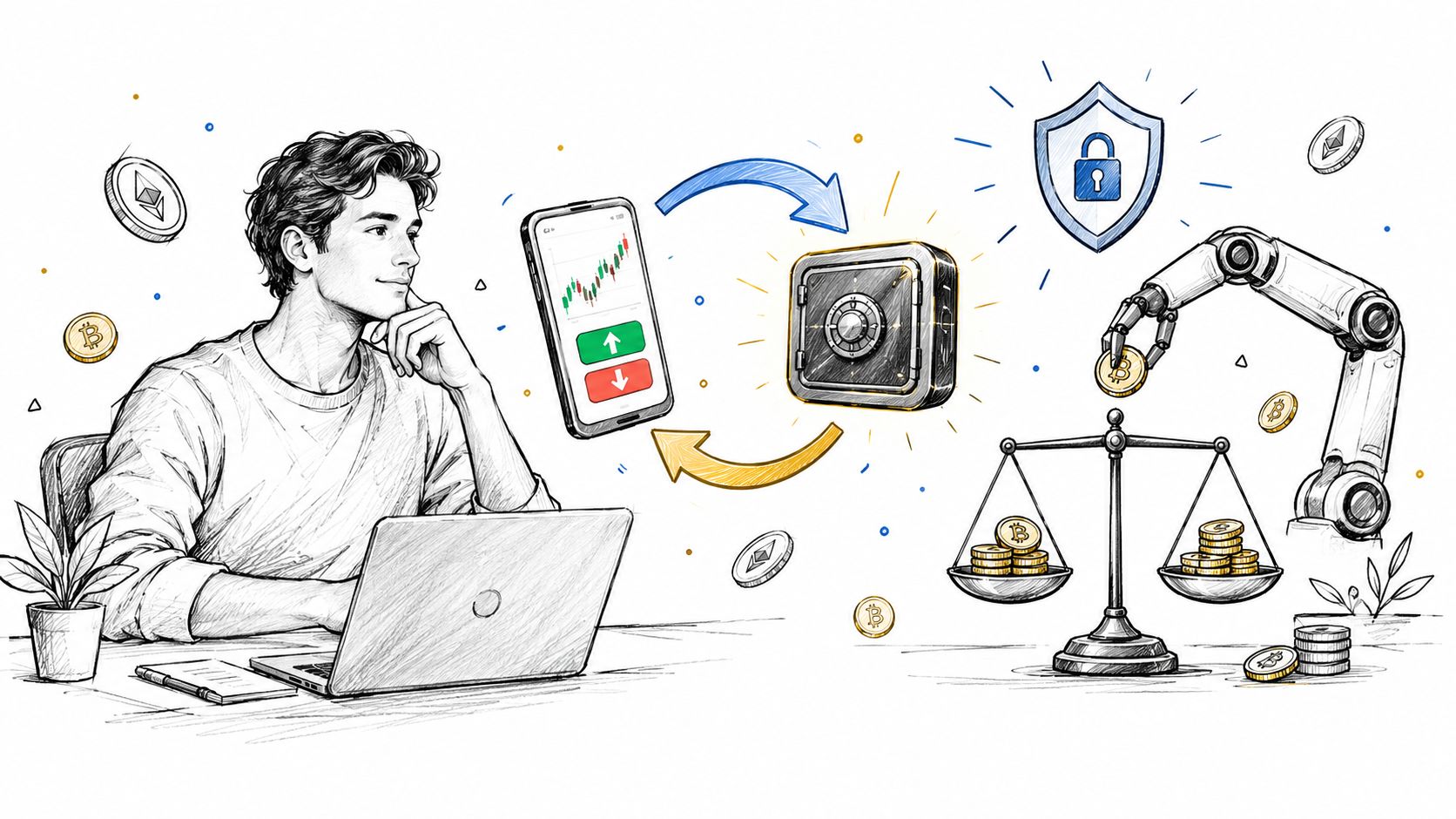
Non-custodial execution keeps funds in the user's wallet, while allowance-based permissions let the bot act only within the approved limits. That matters because the asset never leaves the wallet just to follow a trader. The user still owns the position and still needs to review access.
The key benefit is symmetry. If the source buys and later sells, the follower can mirror both legs instead of sitting on an orphaned position. That matters more than screen time. It also matters across time zones, because unattended mirroring can catch moves that would otherwise be missed while you sleep or work.
Use automation with a kill switch
Automation is only useful if it can stop. A kill switch should pause new copies and let you close open mirrored positions when liquidity thins or execution quality slips. That is the practical answer to a market where the source may still look active while the route has already broken for followers.
copyfomo is one option for traders who want that structure in a Telegram flow. It mirrors filled entries and exits into the user's own wallet at a configured size, with slippage shown on the live feed. For the broader setup, the trading bot for crypto guide covers the basic mechanics without the noise.
Managing Allowances and Execution Latency
Allowance risk is easy to miss until it costs money. On ERC-20 tokens, an allowance gives a spender permission to move assets up to an approved limit. Disconnecting a wallet from an app does not revoke that approval, and revocation still requires an onchain transaction plus a network fee. Ethereum token access revocation guide
Don't grant more access than you need
Unlimited approvals are the lazy default, and they create avoidable risk. The ERC-20 approval pattern guide warns that approving the maximum uint256 value can let a compromised contract drain every token covered by that permission. It also notes a race condition when replacing a nonzero allowance directly, because the spender may use both the old and the new allowance if the update is front-run. ERC-20 approve pattern guide
The operating rule is simple. Review the approved spender. Avoid unnecessary unlimited allowances. Set the allowance to zero before assigning a replacement amount. Revoke contracts you no longer use. Wallet safety belongs in the trade process.
Latency changes the fill
A copied trade that arrives late is still a live order, but it is no longer the same entry. An industry analysis of API latency in crypto trading found that gaps between expected and actual outcomes were strongly correlated with latency, volatility, and order-book liquidity, and that each additional 100 to 200 milliseconds between order initiation and exchange receipt can add more slippage. It also reported a Bitcoin settlement-latency study with an average latency-related arbitrage boundary of 124 basis points, or 1.24%, across 88% of observed cross-exchange price differences. API latency analysis
For automated flows, request pacing matters too. Handle throttling before it handles you. See Captapi's developer guide to throttling for rate-limit control in API-driven systems.
The practical takeaway is direct. Speed helps, but it does not stop price movement. Measure delay, slippage, and fill quality in the trade record. If those numbers break down, the system is no longer copying the source cleanly.
Implementing Your Trading System
A defensible setup is boring. It watches liquidity, sizes small, mirrors exits, and records what happened on entry and exit, not just the last chart print. That separates a usable copy trade system from a wallet-following habit that only works in hindsight.
Log every fill so the edge can be audited
For every fill, keep the quoted price, executed price, price impact, pool liquidity, route, and delay. That record shows whether the source trader's edge survives your execution. Without it, a profitable wallet can still be a bad follow.
Keep the distinctions clean. Source-wallet performance is not the same as follower-executable performance. Unrealized gains are not realized gains. A high win rate still fails if exits miss or losses cluster when liquidity thins.
Use a system that can stop
The best control is a system that can shut itself off when conditions change. Pause new copies when slippage breaches the threshold, when the pool gets too thin, or when the source wallet's trades no longer clear cleanly for you. That is basic trade hygiene.
Past performance does not predict results, and meme coins carry real execution risk. If you want a clean way to mirror verified trades with visible fills and controlled sizing, start with copyfomo on Telegram. It fits the problem this article is about, copying the trade only when the trade is verifiably copyable.
stop reading. start copying.
pick a trader from the fomo leaderboard, set your size, and the entries and the exits land in your own wallet while you sleep.
open copyfomo on telegram →